Understanding Chess Openings
By Akeem Brown.
What is a chess opening?
A chess opening or simply an opening refers to the initial moves of a chess game. In this stage, both players aim to develop their pieces and prepare for the fight ahead – usually the first 10 to 12 moves.
The center
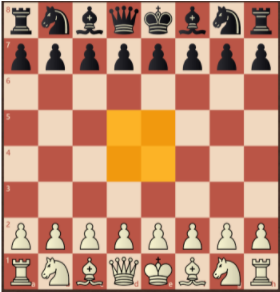
During the first few moves of the game, all your moves should be directed towards the four central squares – e4, d4, d5,45. If you have control there, your pieces can attack on both sides.
Develop all your pieces
Development is “The act or process of growing or causing something to grow or become larger”. In the diagram below, the knight placed on g1 controls only three squares.
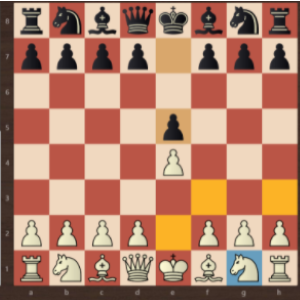
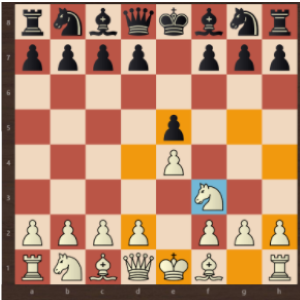
However, when the knight is developed to f3 it controls eight squares. See diagram below. Let’s look on another example.
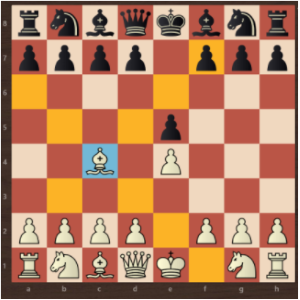
In the diagram below, the bishop controls five squares.
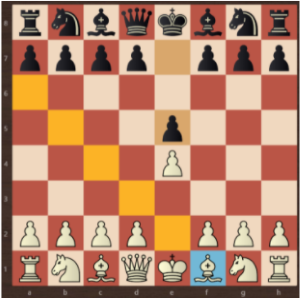
However, when the bishop is developed to c4, it controls nine squares. That is development.
Here is a typical position where all the pieces are developed, the king is castled, and the rooks are connected.
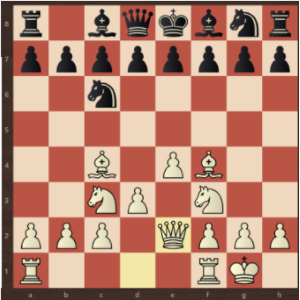
Notice whites’ pieces are pointing towards the four central squares.
With that being said, the four basic opening principles are 1) Move the center pawns (e4, d4, e5, d5) so that you will gain the initiative in the center and will have good space. 2) Control or occupy the center (the center of the board holds the key to a chess game). 3) Develop minor pieces (knights, bishops). 4) Castle your king. The king needs to be safe, as you are going to start attacking in the middlegame and you should not allow any attack on your king. Do not move the same piece or pawn twice unless you have to or it gives an advantage. Do not move your queen unless it builds a huge attack on your opponent or you are winning material.
Things to avoid in the opening
Do not make unnecessary pawn moves in the opening.
You should use the time to develop your pieces, every time you move a pawn, you could have better used that move to develop one of your pieces.
Example:
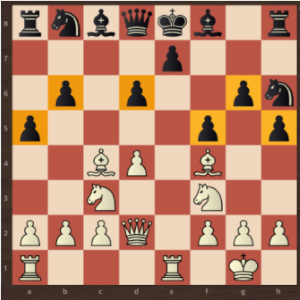
In this position, white is better because all the pieces are more developed and controlling the center. Notice white still has 6 pawns that hasn’t move and black made 6 pawn moves? The reason why white is better is because the time in which black uses to make all these pawn move, white uses the time to develop the pieces and control the center.
Do not develop your queen too early.
If you bring out your queen early on, your opponent will often be able to gain time by making threats against your queen. Usually, the queen is one of the last pieces to be developed to connect the rooks.
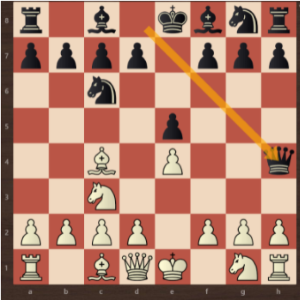
It’s usually not good to bring the queen out too early because your opponent could attack her whilst developing at the same time.
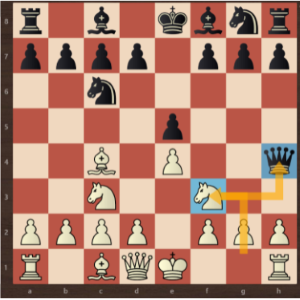
White develops the knight and attack the queen at the same time. In chess terms we say white is gaining a “tempo”. Gaining tempo in chess is gaining an extra move.
Another example...
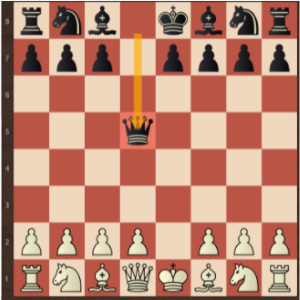
Black just developed the queen to d5, can you spot the development move that white can play and attack the queen at the same time?
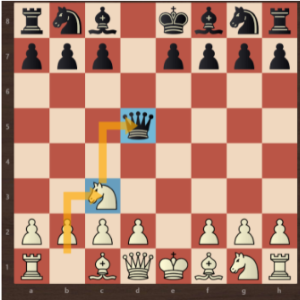
Now white is able to develop the knight and attack the queen at the same time.
Let’s say black moves here...
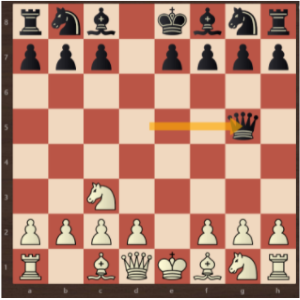
What should white do?
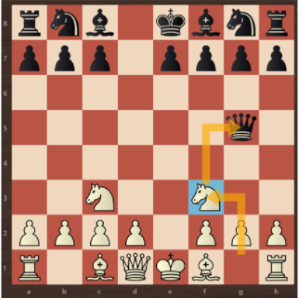
White develops the knight and attacks the queen at the same time – gaining a tempo. While White was developing his pieces, Black had to waste time again and again by moving his Queen which was constantly attacked by White pieces. As a result, at some point the Black Queen was fighting almost the entire White army. The outcome of such a "fight" is easy to predict. And this is precisely the reason why you don't want to 'develop' your Queen too early in most situations.
Avoid pawn grabbing in the opening
When you grab pawns you might be opening up good files and diagonals for your opponent’s pieces. Improving their control of squares in your half or helping them develop.
Here’s an example…
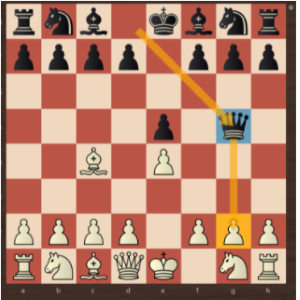
Black just developed the queen while attacking the pawn at the same time. What should white do?
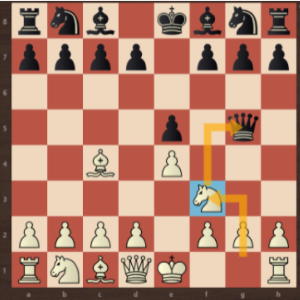
Instead of playing a defensive move, white develops the knight gaining a tempo on the queen, sacrificing the pawn to open the file for the rook. Can you spot the move white should play after black takes the pawn?
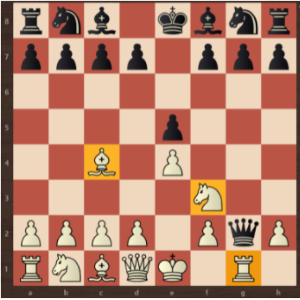
Black only has the queen developed and white now has 3 pieces in the game, the bishop, rook and knight. Notice how from taking the pawn on g2 it opens the file for the rook. Development is worth more than a pawn.
Conclusion
With that being said, remember the four basic opening principles:
1. Move the center pawns.
2. Control the center.
3. Develop your minor pieces.
4. Castle your king.
Furthermore, here are three pitfalls to avoid in the opening:
1. Do not make unnecessary pawn moves in the opening.
2. Avoid developing your queen too early.
3. Avoid pawn grabbing, use the time to develop the rest of your pieces.